
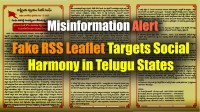
Hyderabad, June 28, 2025 – A fake pamphlet allegedly attributed to the Rashtriya Swayamsevak Sangh (RSS) has been found circulating across WhatsApp groups in the Telugu states, raising serious concerns about an orchestrated attempt to provoke caste-based disharmony using the name of the nationalist organization.
According to sources familiar with the matter, the fabricated document closely mimics the design and layout of an authentic pamphlet recently released by the RSS following its Akhil Bharatiya Pratinidhi Sabha (All India Representative Council) meetings held in March 2025. The legitimate document was intended to convey the organization’s resolutions on the occasion of its centenary year, focusing on national unity, spiritual discipline, and cultural harmony.
However, the fake pamphlet distorts this purpose, using inflammatory language and caste-targeting content to mislead the public and foment division. Experts analyzing the document have identified several inconsistencies that confirm its forged nature.
Key Differences Between Real and Fake Pamphlet
Date Discrepancy: While the official RSS meeting took place in March 2025, the fake pamphlet falsely claims the meeting was held in May 2025.
- Content and Page Format: The genuine RSS pamphlet consists of four pages — two in Telugu and two in English — outlining ideological and organizational guidance. In contrast, the fake version comprises three pages entirely in Telugu, omitting the English content entirely and replacing it with caste-provocative rhetoric.
- Forgery of Names: The authentic pamphlet concludes with three resolutions for RSS volunteers. The forged document, however, adds a third page containing fabricated names of key RSS office-bearers, which do not appear in any verified RSS communication.
- Tone and Language: The real pamphlet speaks of building a harmonious Hindu society as part of a broader vision of global peace and unity. The fake one, by contrast, contains derogatory statements targeting a specific community, clearly deviating from the organization’s officially stated objectives.
Caution Against Circulation
Observers have warned that the circulation of such forged documents amounts to a serious attempt to incite social unrest and manipulate public opinion by misusing the credibility of established institutions. Legal experts note that sharing or forwarding such content, even unknowingly, can attract legal consequences under cybercrime and hate speech provisions of Indian law.
Citizens have been advised to remain cautious and verify the authenticity of documents before sharing them on digital platforms. Group administrators on messaging platforms like WhatsApp are urged to delete such content immediately upon identification and warn users against circulating unverified materials.
Authorities are also calling on the public to report any such instances to cybercrime cells and local police stations to ensure accountability and legal action against the perpetrators


 Arise Bharat
Leave a comment