

By: Kuldeep Jha
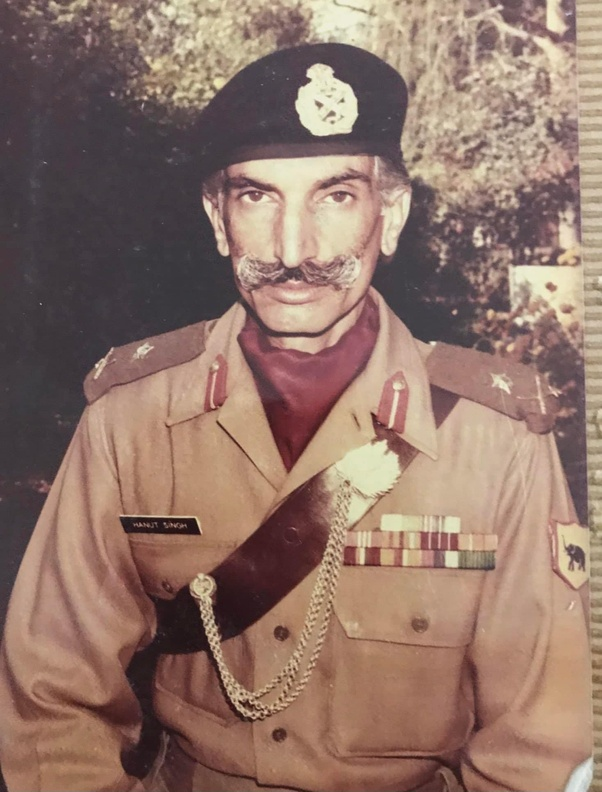
“If they don’t want me, the loss is theirs.” With these resolute words, Lieutenant General Hanut Singh Rathore, PVSM, MVC (6 July 1933 – 10 April 2015), faced the Indian Army’s decision to deny him the role of Army Chief, his spirit soaring above mortal setbacks.
A warrior-saint, a peerless tactician, and a soul steeped in divine purpose, Hanut Singh was the embodiment of a sanyasi yoddha—a monk of war whose valor in the 1971 Battle of Basantar earned him the Maha Vir Chakra and an extraordinary honor from Pakistan: Fakhr-e-Hind (Pride of India).
His life, a sacred tapestry of martial brilliance and spiritual serenity, inspires us to embrace our inner warrior, seek truth, and rise above adversity. Hanut Singh Rathore remains a legend without equal, a beacon for all who dare to live with purpose.
A Rajput’s Sacred Calling
In the sun-scorched heart of Jasol, Rajasthan, Hanut Singh was born into the proud Mahecha Rathore Rajput clan, where valor was a sacred vow and honor a way of life. His father, Lieutenant Colonel Arjun Singh, a cavalry hero of the Jodhpur Lancers and Kachhawa Horse, ignited in him a divine spark of duty. At Colonel Brown Cambridge School in Dehradun, young Hanut’s brilliance shone, earning a rare double promotion from Class 7 to Class 9. With books as his sacred texts, he immersed himself in Rajput lore, their tales of sacrifice forging his soul. For Hanut, the military was no mere path—it was a divine calling, a vow to serve with eternal purpose.
At the Joint Services Wing in Dehradun, Hanut stood as a quiet sage among peers destined for greatness, like S.F. Rodrigues, Ram Das, and N.C. Suri. His iron discipline and moral clarity commanded reverence, though he sought no acclaim. In 1952, he joined the elite 17 Horse (Poona Horse), pledging to forge it into the Indian Army’s finest regiment. This was no ordinary ambition—it was a sacred mission to honor his heritage and elevate his men to immortality.
Basantar: The Yoddha’s Finest Hour
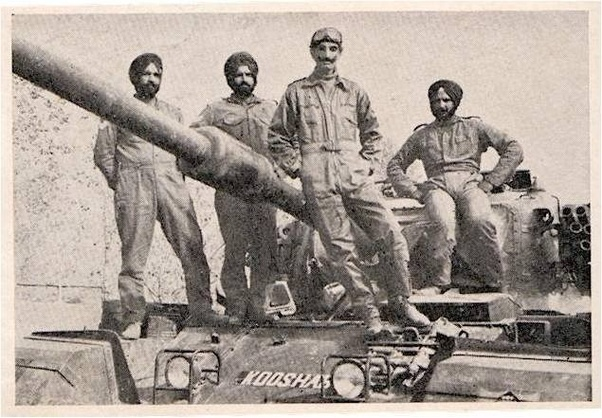
The 1971 Indo-Pakistani War was Hanut Singh’s sacred battlefield, and the Battle of Basantar his divine triumph. As Lieutenant Colonel commanding 17 Horse in the Shakargarh Sector, he faced Pakistan’s formidable 8 Armoured Brigade with the calm of a sanyasi and the fire of a yoddha. On 16–17 December, as enemy tanks and artillery roared, Hanut led from the front, his tank a spearhead in the chaos, his presence a divine spark. Fearlessly navigating threatened sectors, he inspired his men to annihilate 50 enemy tanks—decimating Pakistan’s 13 Lancers and crippling 31 Cavalry—while losing only 13 of their own.
His command was a sacred mantra: “No tank will move back even an inch.” These words ignited Second Lieutenant Arun Khetarpal, who, fueled by Hanut’s resolve, fought until his tank burned, destroying enemy forces and earning a posthumous Param Vir Chakra. Hanut’s gallantry won him the Maha Vir Chakra, his citation praising his “utter disregard for personal safety” and ability to inspire “commendable acts of gallantry.” His leadership turned the Poona Horse into a force of divine retribution, a regiment that etched its name in history.
Fakhr-e-Hind: A Rare Honor from the Enemy
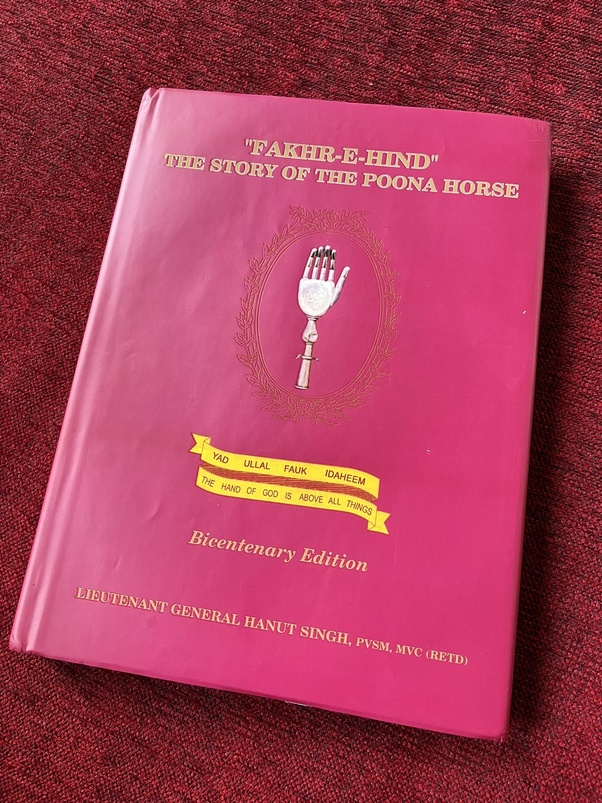
In a gesture as rare as it was profound, Pakistan’s military bestowed upon the Poona Horse the title Fakhr-e-Hind—Pride of India—following the Battle of Basantar. This unprecedented tribute was not merely for the regiment but for the indomitable spirit of Hanut Singh, whose tactical genius and fearless leadership had humbled one of Pakistan’s proudest cavalry units. The title was a recognition of his ability to transform his men into an unstoppable force, a testament to his divine command. To earn such respect from an adversary is a mark of true greatness, a crown that Hanut wore not with pride but with the humility of a sanyasi, knowing his work was for a higher purpose.
A Sage of Strategy: Redefining the Art of War
Hanut Singh was no ordinary commander; he was a visionary sage who reshaped the art of war. Dismayed by outdated tactics, he studied German Panzer masters like Hermann Balck, crafting a doctrine of mobile warfare that became India’s shield. His meticulous notes, refined through years of meditation and experience, became sacred texts at the Armoured Corps Centre and School (ACCS) in Ahmednagar, where he served as instructor and Commandant. His manuals, still revered, reflect a mind that saw battles as a divine chessboard.
As General Officer Commanding 1 Armoured Division and II Corps during Operation Brasstacks (1986–87), Hanut molded his formations into a force of celestial precision. His focus on balance—reserves, logistics, firepower—prepared his Strike Corps for General K. Sundarji’s bold vision. Though war was averted, Hanut’s readiness awed Pakistan’s General Khalid Arif, who feared his divine maneuvers. Hanut didn’t just lead—he transcended, turning soldiers into warriors and battles into sacred dances.

The Sanyasi’s Soul: Compassion and Truth
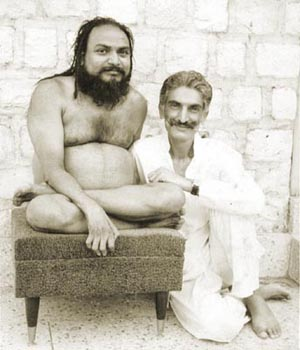
Hanut Singh was a sanyasi yoddha, a warrior-monk whose spartan life and spiritual depth were as awe-inspiring as his battlefield triumphs. Known as “Gurudev” for his sage-like guidance, he shunned worldly distractions for meditation and the Bhagavad Gita, where he found the truth: Dharma and Karma were one. In war’s chaos, his “meditation bunker” was his temple, a sanctuary for divine guidance that never faltered in duty.
His compassion was a divine gift. He banned soldiers from menial tasks on holidays, uplifted their lives, and forgave errors while demanding excellence. Every tank commander’s name was a prayer on his lips, and his men—from jawans to generals—worshipped him as a living deity. Yet, Hanut was fearless in truth. He challenged flawed strategies, earning detractors but also reverence from giants like Sundarji.
The Chief Denied: A Divine Test
Despite his celestial brilliance, Hanut Singh was denied the role of Army Chief, a mortal failing that wounded the Indian Army, not him. His bachelorhood and quiet nature were flimsy excuses; the true sin was petty rivalries and false accusations of “religious bigotry.” His spirituality, a unifying force for all faiths, was twisted against him. Yet, when told of his supersession, Hanut stood serene: “If they don’t want me, the loss is theirs.” With divine dignity, he served until 1991, his loyalty a testament to his sacred vow.
A Life of Divine Serenity
In retirement, Hanut embraced the life of a true sanyasi in Dehradun, building an ashram near Jodhpur where he meditated and studied, seeking the divine within. His disciplined life sustained him, and on 10 April 2015, he attained samadhi during meditation at his home in Rajpura, Dehradun—a sacred ascent for a soul so pure. The Army’s planned memorial in Jasol will honor him, but his true temple is the hearts he touched.
A Divine Flame Eternal
Hanut Singh Rathore was a warrior of steel, a sanyasi of soul, a leader who turned the Poona Horse into Fakhr-e-Hind and battles into divine sagas. His life is a sacred mantra: Be fearless in truth, boundless in compassion, and steadfast in purpose.
The Army’s loss was not his defeat but a divine challenge to us all—to rise above, lead with heart, and live with celestial courage.
Let his story be your sacred fire, urging you to fight for greatness, love with humility, and shine through adversity. Lt Gen Hanut Singh Rathore, the sanyasi yoddha without a peer, remains a divine flame, guiding us to eternity.


 Arise Bharat
Leave a comment